
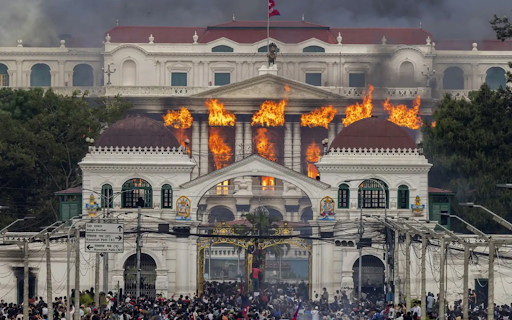
The powerful, youth-led protests sweeping Nepal are drawing strong comparisons to recent uprisings in neighboring Sri Lanka and Bangladesh, where popular movements successfully toppled entrenched governments. What started as a protest against a social media ban in Nepal has rapidly evolved into a formidable challenge to the entire political order, raising questions about whether the Himalayan nation is on the path to a similar political reckoning.
The parallels are striking. Like in Sri Lanka, the protests in Nepal are fueled by widespread anger over economic hardship, corruption, and a political elite perceived as arrogant and unaccountable. The movement is largely decentralized and driven by a younger, tech-savvy generation that has effectively used social media to organize and expose government failings. The attempt to ban these very platforms was the misstep that galvanized mass opposition.
The Nepalese government’s decision to use deadly force, resulting in 19 deaths, has only strengthened the movement’s resolve, mirroring how state repression in other countries often backfires and fuels greater resistance. The protesters’ demands have grown from reversing the ban to now calling for the dissolution of the government, a sign that they are seeking a complete systemic overhaul, not just superficial changes.
As local editor Prateek Pradhan observed, “It appears people are just done with how things have been going on. They want a change.” With the prime minister already forced to resign, the momentum is clearly with the protesters. The key question now is whether this street power can translate into lasting political transformation, as it has elsewhere in the region, or if it will lead to further instability in a nation that has already endured 13 governments in 17 years.