
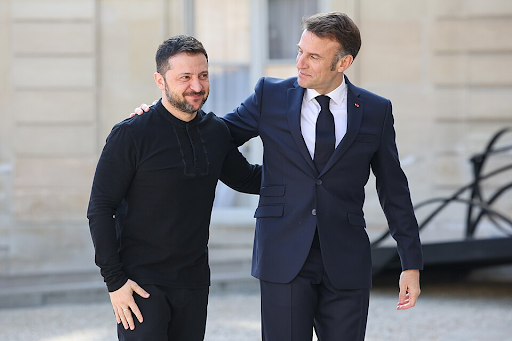
In a bold financial move, Ukraine plans to fund a significant portion of its new 10-year defense pact with France by using future revenues generated from frozen Russian central bank assets. President Volodymyr Zelensky, speaking in Paris, confirmed his government will aim to deploy funds from a Group of Seven (G7) mechanism to finance the purchase of French hardware, which includes a preliminary deal for 100 Rafale fighter jets, air defense systems, and drones.
This strategy of using the aggressor’s own immobilized assets to fund Ukraine’s defense has been discussed for over a year and is now being put into action. The EU is still working to finalize the complex legal plan, but the G7’s backing provides a clear path forward. This innovative funding is critical, as Ukraine’s traditional reliance on international donors has been challenged by the Trump administration’s decision to halt US support, placing the financial burden squarely on European allies.
The defense hardware this money will purchase is desperately needed. Russia’s air force has stepped up its attacks, causing rolling blackouts and killing civilians with a relentless barrage of missiles and glide bombs. Zelensky has made it his top priority to obtain more air-defenses, including modern fighter jets and ground-based systems like the Patriot and the French SAMP/T, to counter this threat.
The French deal, which Zelensky called “historical,” provides a comprehensive suite of these tools. In addition to the Dassault-made Rafales, Kyiv will receive eight SAMP/T systems, which Zelensky praised as “one of the greatest” in the world. The pact also includes radars, drones, and even joint industrial projects to co-produce interceptor drones.
While the funding mechanism is being finalized, the French presidency noted that other resources are available to begin the process. The contracts, which will be signed individually over the 10-year period, will also be financed by sources such as the European Union’s €150 billion Security Action for Europe (SAFE) loan fund, ensuring the flow of equipment can begin.