
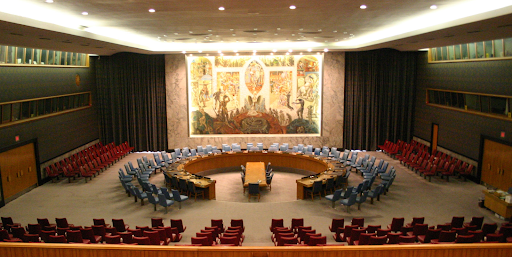
The UN Security Council’s adoption of a US-drafted resolution on Gaza has introduced controversial new language into the diplomatic lexicon, referencing a “credible pathway to Palestinian self-determination and statehood.” This clause, part of a broader plan to end the two-year war, has become a focal point of both hope and intense political controversy. The resolution, which passed on Monday after Russia and China abstained, endorses President Donald Trump’s 20-point plan for the enclave.
The “pathway” to statehood is not presented as an immediate guarantee. The resolution’s text makes it conditional, stating that such a possibility may arise only “once the Palestinian Authority has carried out a reform program and Gaza’s redevelopment has advanced.” The plan also includes a US-led “dialogue between Israel and the Palestinians to agree on a political horizon.” For the Palestinian Authority, which welcomed the resolution, this language represents a significant diplomatic opening and a reason for their crucial support, which diplomats say helped prevent a Russian veto.
However, this very clause has triggered a backlash in Israel. Prime Minister Benjamin Netanyahu, under pressure from hardline members of his government, publicly reiterated his opposition to a Palestinian state. This highlights a fundamental disagreement with a key premise of the resolution his American allies drafted. Netanyahu instead has focused on the plan’s security elements, vowing to demilitarize Gaza “the easy way or the hard way.”
The resolution’s main thrust is the authorization of two new bodies: a “Board of Peace” chaired by President Trump to manage reconstruction, and an “international stabilization force” (ISF) to demilitarize Gaza. This demilitarization mandate is the reason for the plan’s other major opponent: Hamas. The militant group, which rules Gaza, issued a statement rejecting the plan as “international guardianship” and vowing that it “will not disarm.”
This collection of contradictory reactions—Hamas’s rejection, the PA’s acceptance, Israel’s partial opposition, and Russian/Chinese skepticism—underscores the fragile nature of the US-led initiative. While US Ambassador Mike Waltz praised the plan as a path to a “prosperous and secure” Gaza, the deep divisions over its core components, especially the future political horizon, suggest a difficult road ahead.