
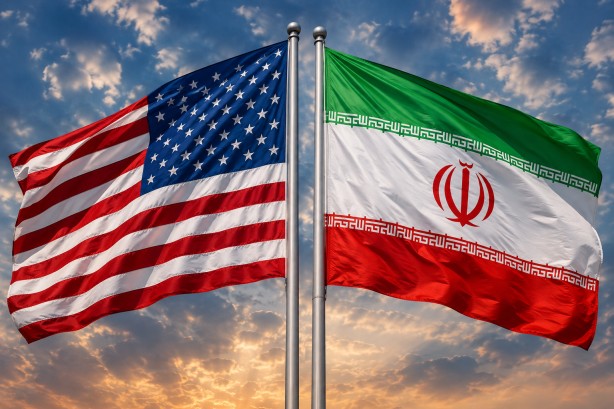
The recent escalation in military confrontation between the United States and Iran marks the most significant surge in hostilities since the two countries agreed to an interim ceasefire last month. The United States initiated a series of airstrikes targeting approximately 80 Iranian military sites, actions justified by Washington as necessary to safeguard freedom of navigation through the Strait of Hormuz. These airstrikes were a response to Iran’s attacks on three commercial vessels navigating the strategic waterway, highlighting the fragile nature of the ceasefire.
In retaliation, Iran launched missile and drone assaults on U.S. military installations in Bahrain and Kuwait. Additionally, Iran unveiled a new military doctrine, declaring that it will consider the United States and its regional allies as equivalent adversaries in any forthcoming conflicts. This stance underscores a notable shift in Iran’s military strategy, potentially complicating diplomatic efforts aimed at easing tensions.
President Donald Trump issued a warning that the United States is prepared to pursue further military actions should Iran persist with its aggressive maneuvers. Nonetheless, he expressed a belief that these hostilities would not evolve into a long-term war. The unfolding scenario casts doubt on the future of the ceasefire agreement, which was originally intended to serve as a foundation for discussions concerning Iran’s nuclear program, potential sanctions relief, and enduring security measures in the Strait of Hormuz.
The strategic significance of the Strait of Hormuz remains a contentious point, with Iran asserting its right to oversee shipping activities in the region. In contrast, the United States views the recent attacks on commercial vessels as a violation of international maritime laws, warranting its military intervention. This disagreement underscores the broader geopolitical tensions that continue to strain diplomatic relations between the two nations.
The renewed conflict has had immediate global economic repercussions, notably causing an increase in oil prices due to fears of possible disruptions in one of the world’s most crucial energy corridors. As the situation develops, international stakeholders remain watchful, understanding that the stability of this vital shipping route is essential to global energy security.