
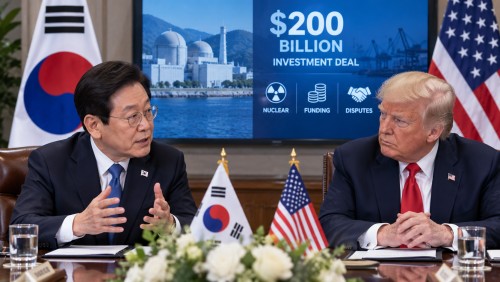
The ongoing negotiations between South Korea and the United States over a $200 billion investment in U.S. projects could experience significant delays due to unresolved issues surrounding nuclear energy initiatives. This uncertainty may impact the anticipated economic boost and energy partnership the deal is expected to foster between the two nations.
At the heart of the dispute is the disagreement over nuclear reactor designs for proposed projects in the United States. South Korea and the U.S. have been discussing building eight reactors, including six based on Westinghouse’s AP1000 design and two using South Korea’s APR1400 technology. However, U.S. officials and Westinghouse are reportedly against including the Korean-designed APR1400, complicating the nuclear package’s finalization.
In addition to design preferences, investment stakes and control are contentious points. South Korea aims to secure a 15% to 20% equity stake in Westinghouse, along with voting rights and a board seat, while Westinghouse seeks to restrict Seoul’s ownership to below 10%. This disagreement underscores the complexities of balancing financial interests and strategic control in such a large-scale investment endeavor.
Another layer of complexity involves the timing of financial contributions and the allocation of investment returns and risks. The U.S. has reportedly requested over $9 billion from South Korea by the end of the year, whereas Seoul plans a phased contribution strategy starting with a smaller amount in 2026. Furthermore, the countries differ on profit-sharing models, with South Korea advocating for successful project returns to offset losses, while the U.S. prefers separate accounting for each project.
Despite these challenges, both governments remain committed to reaching a consensus, as the potential benefits of the investment package are substantial. The South Korean Industry Ministry has emphasized that discussions continue and no final decisions have been made regarding the projects and funding structure. This ongoing negotiation reflects the broader complexities of international economic partnerships in the nuclear energy sector.