
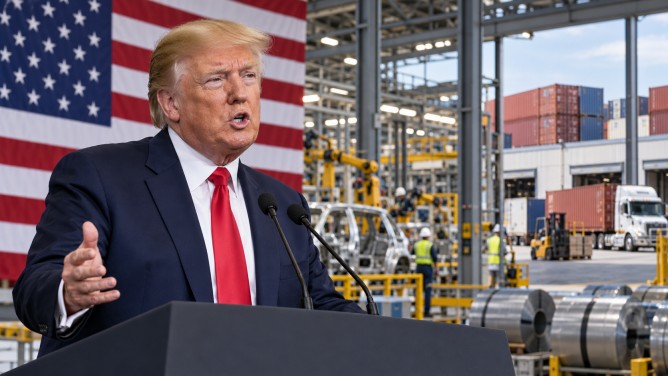
President Donald Trump has issued a stark warning to foreign companies, indicating that they could face tariffs ranging from 150% to 300% if they do not establish manufacturing plants in the United States. This measure, he outlined, is part of a broader strategy to boost foreign investment and enhance domestic manufacturing. Companies have been given an 18-month window to comply before these tariffs may be enforced.
This announcement occurs in the context of ongoing economic negotiations between the United States and South Korea, specifically concerning a massive $350 billion investment deal. Under this agreement, South Korea is set to invest heavily in the U.S., which in return will see a reduction in tariffs on Korean goods from 25% to 15%.
The investment plan includes a significant $150 billion for shipbuilding initiatives and another $200 billion for various strategic investments. However, discussions between the two nations have encountered hurdles, particularly regarding South Korea’s potential involvement in the proposed Alaska LNG project. This large-scale energy project, estimated to cost between $44.5 billion and $54.5 billion, involves the construction of a substantial pipeline, gas treatment facilities, and an LNG terminal. South Korean officials have noted that a thorough review of the project’s commercial viability is necessary before committing to any investment.
As part of this bilateral agreement, the first confirmed project is a gas-fired power plant located in Texas. Additionally, the two countries have explored possible collaboration on nuclear reactors, although these plans remain in preliminary stages and subject to further evaluation.
The U.S. administration’s push for increased foreign investment is seen as a move to bolster the manufacturing sector, and these potential tariffs serve as a significant incentive for overseas companies to consider establishing a physical presence in the country. The evolving economic relationship with South Korea highlights the complexities and strategic interests at play in international trade negotiations.