
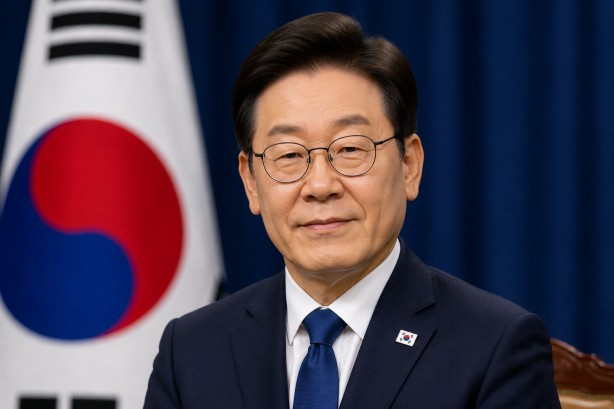
In a recent statement, South Korean President Lee Jae Myung robustly defended the government’s ambitious regional investment strategy amid criticism from opposition parties. Dismissing claims that the initiative is a ploy to enhance his approval ratings, President Lee emphasized that the plan is aimed at securing the nation’s economic future. The government has recently rolled out its “three megaprojects” plan, which seeks to transform the economy through substantial investments in semiconductors, physical artificial intelligence (AI), and AI data centers. This initiative is projected to attract a total investment of 4,755 trillion won, equivalent to approximately $3.11 trillion.
Key components of this strategy include significant contributions from major corporations such as Samsung and SK hynix. Samsung is set to construct two memory chip fabrication plants in Gwangju, while SK hynix has plans to establish two semiconductor fabrication facilities in the Jeolla provinces. Together, these projects represent a combined investment of 800 trillion won. These developments are part of a broader effort to boost South Korea’s industrial competitiveness and provide new opportunities for economic growth.
President Lee countered the notion that the investment strategy was politically motivated by pointing out that if the aim had been to garner public support, the plan would have been unveiled prior to the June local elections. He asserted that the projects are designed to ensure long-term economic stability and growth, rather than to serve any immediate political gains.
Highlighting the broader impact of these megaprojects, President Lee noted that they are intended to generate employment opportunities for younger generations and improve overall living standards. He stressed the importance of focusing on enhancing the quality of life for citizens over the pursuit of short-term approval ratings. The president’s commitment to these goals underscores a strategic vision aimed at sustaining South Korea’s economic advancement and technological leadership on the global stage.