
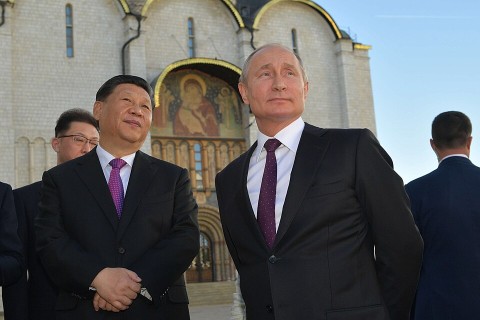
In a significant diplomatic exchange, Xi Jinping and Vladimir Putin have communicated through “congratulatory letters” preceding Putin’s anticipated visit to Beijing this week. This visit comes shortly after Donald Trump’s departure from China following an intense summit. Xi highlighted that China and Russia’s bilateral cooperation has “continuously deepened and solidified,” marking the 30th anniversary of their strategic partnership, as reported by Chinese state media.
Putin is slated to arrive in China on Tuesday evening, with discussions scheduled with Xi on Wednesday morning, according to Kremlin aide Yuri Ushakov. The agenda for these talks includes a comprehensive review of all facets of their bilateral relations, notably the proposed Power of Siberia 2 gas pipeline. Analysts have noted the unusual frequency of high-profile visits, with China hosting leaders from both the U.S. and Russia within such a short time frame, a rarity in the post-Cold War era.
The deepening ties between China and Russia have raised concerns in the West, particularly following Russia’s full-scale invasion of Ukraine in 2022. Western diplomats and analysts assert that China’s economic and diplomatic backing has played a role in prolonging the conflict. Xi and Putin have met over 40 times, far exceeding Xi’s interactions with Western leaders. Since 2022, bilateral trade between the two nations has soared, with China purchasing over a quarter of Russia’s exports, significantly bolstering Moscow’s finances through substantial crude oil purchases.
China’s acquisition of Russian fossil fuels has amounted to more than $367 billion since the conflict began, as per data from the Centre for Research on Energy and Clean Air. This has not only supported China’s energy security but has also been crucial given the Middle East crisis’s impact on oil shipping through the Strait of Hormuz. During Trump’s recent visit to China, discussions did not heavily feature the Ukraine conflict or Sino-Russian relations, focusing instead on trade, Taiwan, and Middle Eastern issues. Trump noted a mutual understanding with Xi on reopening the Strait of Hormuz, though he remains undecided on a major arms deal with Taiwan, a point of contention for Beijing.
Joseph Webster from the Atlantic Council speculated that Taiwan might subtly influence the Xi-Putin meeting, with China possibly pursuing further fossil fuel agreements with Russia to secure energy supplies in case of a future conflict. The potential expansion of Russian oil pipeline capacity to China, through projects like the Power of Siberia 2, could substantially enhance Beijing’s energy security concerning Taiwan. Meanwhile, Russia continues to advocate for progress on this pipeline, which would significantly augment the gas network capacity between the two countries.