
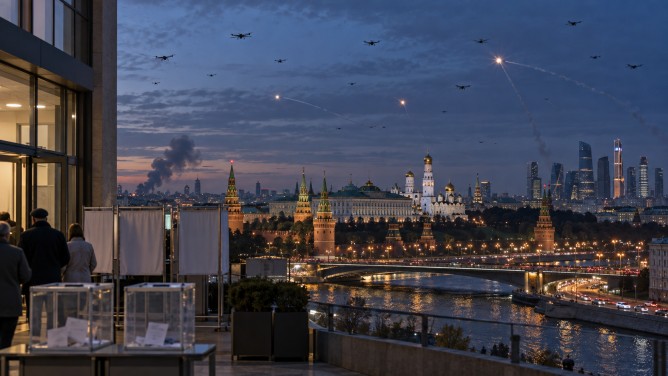
A large-scale drone assault on Moscow and its environs has resulted in at least three fatalities and significant damage to an oil refinery, as claimed by Russian authorities. The attack has prompted the evacuation of approximately 400 residents from a damaged 21-storey apartment building, highlighting the immediate human impact of the ongoing conflict.
Moscow Mayor Sergei Sobyanin reported that over 1,600 drones have been intercepted since the offensive commenced on Saturday, with about 450 of these targeting the Russian capital. Several drones managed to reach the Moscow Oil Refinery, exacerbating the situation by causing damage to critical energy infrastructure. Emergency services have been actively deployed to assist those affected in the region.
This aggressive move by Ukraine coincided with the concluding day of Russia’s parliamentary elections, marking the first such elections since Russia’s full-scale invasion of Ukraine in 2022. Ukrainian President Volodymyr Zelenskyy stated that the drone strikes were intended to hit key Russian energy and logistics nodes, reflecting Ukraine’s strategic focus on crippling Russia’s military and economic capabilities.
Russian officials have accused Ukraine of attempting to disrupt the election process through this attack, underlining the broader geopolitical stakes involved. The escalation in drone usage by Ukraine, employing long-range and domestically produced weapons, underscores a tactical shift to strike deeper within Russian territory, targeting essential infrastructure.
The timing of the attack, amidst an already tense electoral backdrop, has added another layer of complexity to the ongoing conflict between the two nations. As both sides continue to engage in military and strategic maneuvers, the human and economic toll of this protracted conflict remains a pressing concern for those caught in its crossfire.