
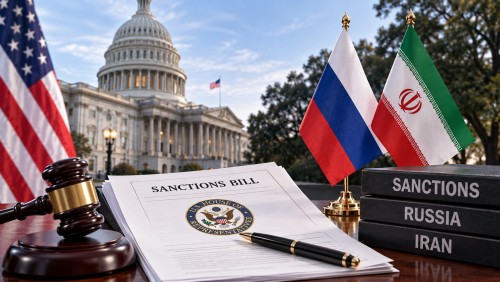
The passage of the Lindsey O. Graham Sanctioning Russia and Iran Act of 2026 by the U.S. House of Representatives could intensify economic challenges for Russia and Iran, significantly impacting international trade and diplomatic relations. This legislation aims to ramp up economic pressure on Russia due to its military actions in Ukraine and prolong sanctions on Iran until 2031.
Passed by a 262-159 vote, the bill now awaits President Donald Trump’s decision following Senate approval in August. If enacted, it would impose stricter sanctions on Russian officials, financial institutions, and energy sectors, alongside targeting the so-called shadow fleet used to evade existing measures. Furthermore, the bill proposes additional tariffs of up to 100% on goods from countries engaged in buying Russian oil or gas or those aiding in sanction evasion.
The legislation also seeks to extend the Iran Sanctions Act for another five years, introducing stricter controls over Iran’s financial and energy-related activities. These measures reflect a concerted effort to curb Iran’s economic capabilities and limit its influence in the region.
Despite bipartisan support, the bill has faced opposition from some lawmakers concerned about expanding presidential authority over tariffs and sanctions. This aspect of the legislation has sparked debate over the balance of power and the role of executive discretion in economic sanctions.
The ongoing geopolitical tensions and the legislative response underscore the complex interplay of international relations, economic policy, and legislative action as the U.S. navigates its foreign policy objectives.